
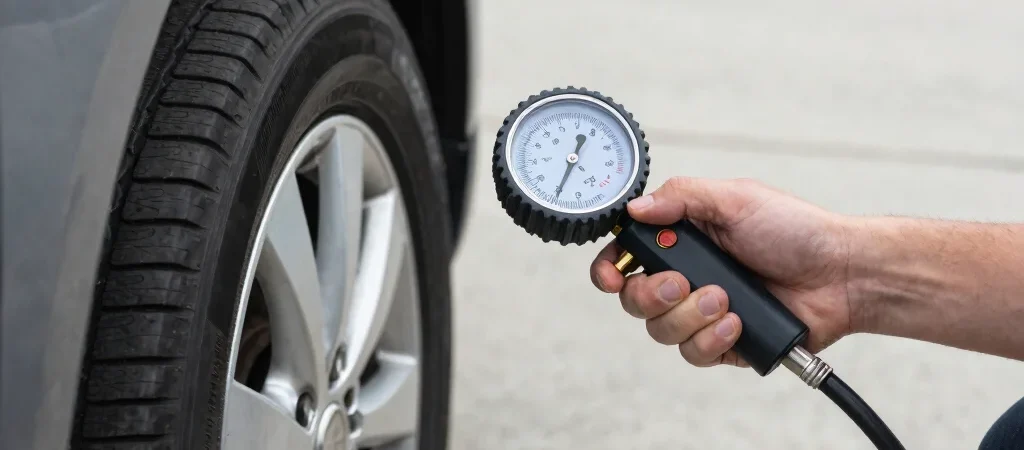
The number molded into a tire’s sidewall is easy to mistake for the pressure you should use. It usually describes a tire limit, not the recommended pressure for your particular vehicle. For the right number, start with the vehicle’s tire information label or owner’s manual.
Find the vehicle recommendation
Look for a label on the driver’s doorjamb, door edge, or another location listed in the owner’s manual. It may give different pressures for front and rear tires, or guidance for a heavily loaded vehicle. Use the information for your car or truck, not a number copied from a different vehicle.
Measure when tires are cold
Check pressure before driving far, ideally after the vehicle has been parked for several hours. Driving warms the tires and can raise the reading. Remove the valve cap, press a tire gauge firmly onto the valve, and compare the reading with the vehicle’s recommended pressure.
Recheck after adding air
Add air in small amounts and measure again so you do not go past the recommendation. Check all four tires, and include the spare if the manual provides a pressure for it. If the tire-pressure warning stays on after you have checked the tires, consult the manual; the system may need time to update or may need attention.