
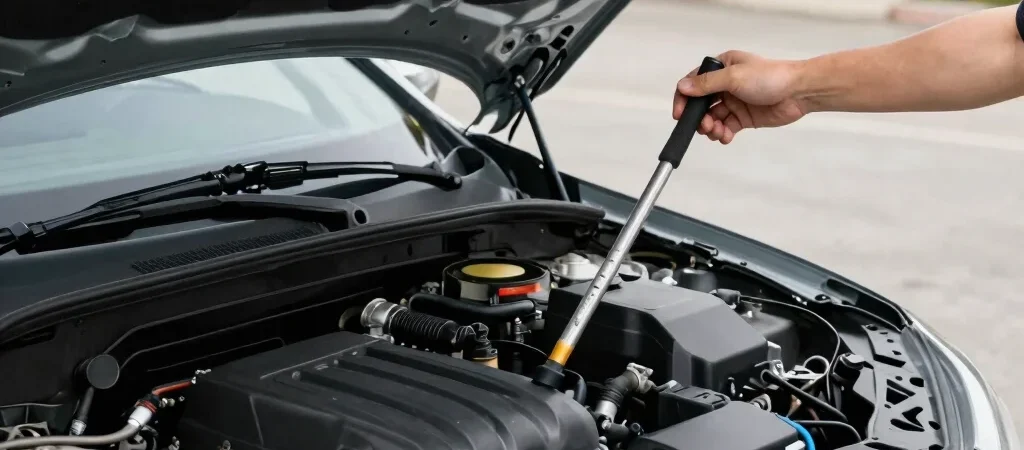
An oil check is straightforward once you know when and where to look. Park on level ground, then follow your owner’s manual for how long to wait after shutting off the engine. Some vehicles use an electronic oil-level display instead of a dipstick, so the manual is the best place to confirm the method.
Prepare for a clear reading
If your vehicle has a dipstick, locate it using the manual and pull it out carefully. Wipe it clean with a paper towel or lint-free cloth, push it fully back into its tube, then remove it again to read the level. Keeping the vehicle level helps the oil settle where the measurement is meant to be taken.
Read the dipstick marks
Look for two marks, holes, or a shaded range near the end of the dipstick. The oil should fall within the range specified for your vehicle. If the reading is below the indicated area, check the manual for the correct oil type and how to add it in small amounts.
Avoid adding too much
After adding oil, give it time to drain into the engine and check the level again. Do not assume that an entire container is needed; the amount depends on how low the reading was. If the level drops again, you see a leak, or an oil-pressure warning appears, consult the manual and arrange appropriate service rather than treating a top-up as a fix.